Walk-In Truck Cap | Commercial-Grade Access & Storage
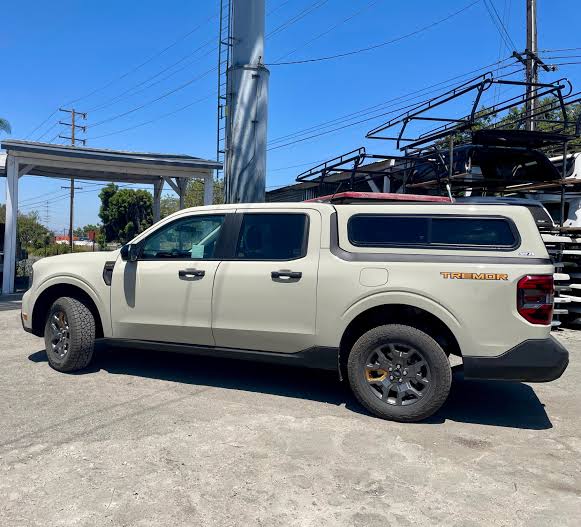
Our walk-in truck cap is built for contractors and commercial operators who need full standing height inside their truck bed. This isn't a recreational topper — it's a mobile workspace designed for daily jobsite use.
We engineer every walk-in cap with reinforced side walls, a raised roof height that accommodates full-size adults, and integrated ladder rack mounts for carrying material overhead. The rear door opens 180 degrees for pallet-sized cargo, and every seam is sealed against dust and weather. If your crew spends half the day climbing in and out of the bed, this cap eliminates the crouch-and-crawl routine that slows down every stop.
Full-height access & commercial-grade specs
Construction & Materials
We build walk-in caps from two materials depending on your workload: reinforced fiberglass for lighter-duty applications, or welded aluminum for heavy commercial fleets. Both options use thicker sidewalls than a standard recreational topper — 30% more material in high-stress areas like door frames and roof supports.
The roof structure uses an internal steel frame that distributes ladder rack weight across the entire cap, not just mounting bolts. Every seam is sealed with automotive-grade butyl tape before assembly, then a second perimeter gasket is applied during installation. The same reinforced-aluminum extrusion we spec for our commercial truck cap models forms the base rail here, creating a compression seal against your truck bed that holds up to pressure washing and winter road salt.
Interior Workspace & Lighting
Full Standing Height
We designed the interior around a 6’2″ clearance baseline, measured from the bed floor to the inside roof peak. That accommodates most adults standing upright without hunching. The raised roof profile adds 18 inches of vertical space compared to a standard cap, and we reinforce the roof bow to handle the extra wind load at highway speeds.
Lighting & Power
Every walk-in cap ships with a three-fixture LED bar mounted along the roof centerline. Each fixture draws 4 watts and connects to your truck’s 12V system through a relay that ties into the dome light circuit — flip the rear door switch and the interior floods with 1200 lumens. We also pre-wire a second circuit for aftermarket accessories like tool chargers or inverters.
Door Systems & Access Points
The rear opening uses barn-style doors that swing 180 degrees and latch against the side walls. Each door panel is 34 inches wide, creating a 68-inch opening for pallet jacks and full-size toolboxes. Stainless steel piano hinges run the full height of each door, and a three-point locking system engages weatherproof strikepoints at the top, middle, and bottom of the door frame.
Dual side doors are standard on long-bed models (8-foot beds) and optional on short beds. Each side door measures 24 inches wide by 36 inches tall and includes a paddle latch with a keyed cylinder. We position the side doors 40 inches forward of the tailgate, right where most contractors store frequently accessed tools and fasteners.
More Commercial Truck Cap Solutions from ARE
Rated 4.8 by verified buyers
Walk-In Truck Cap Questions from Contractors
Our walk-in truck cap provides 6'2" of interior clearance on standard 8-foot beds, measured from the bed floor to the inside roof peak. This allows most adults to stand upright without hunching. On 6.5-foot short beds, the clearance is slightly reduced to 6'0" due to the shorter bed length and the cap's slope angle matching your cab height.
Yes. Every walk-in cap includes four integrated ladder rack mounting points that attach directly to the internal steel roof frame. Each mount is rated for 125 pounds, and the four-point system supports up to 500 pounds total. The mounts use a universal T-slot profile compatible with most aftermarket racks, and we also offer our own ARE-branded ladder rack system designed specifically for walk-in cap roof profiles.
We reinforce the roof structure with an internal steel frame that distributes wind load across the entire cap, not just the mounting points. The taller profile does create slightly more wind resistance than a low-profile cap, which typically reduces fuel economy by 1-2 MPG at highway speeds. However, the aerodynamic front slope and flush-mount door seals minimize turbulence, and most commercial operators find the trade-off worthwhile for the interior workspace they gain.
Yes, when properly installed. We seal every seam with automotive-grade butyl tape during manufacturing, then apply a compression gasket around the entire base perimeter during installation. The rear barn doors and side access doors use weatherproof strikepoints and continuous rubber seals. We test every cap with a high-pressure spray-down before it leaves our facility. Proper drainage is critical — the cap's internal channels route water to drain holes at each corner, so keeping those clear prevents any pooling.
Fiberglass caps are lighter (about 200 pounds for a full walk-in model) and easier to paint-match to your truck. They also insulate slightly better in extreme temperatures. Aluminum caps weigh around 275 pounds but are more dent-resistant and preferred by fleet operators who need maximum durability. Both materials use the same internal steel roof frame and mounting system, and both carry the same weatherproof warranty. We recommend fiberglass for single-truck owners and aluminum for high-use commercial fleets.
Absolutely. We pre-drill mounting holes along the interior sidewalls at 12-inch intervals specifically for aftermarket shelving. Our own ARE shelving kits bolt directly into those holes without additional drilling. Most contractors add shelving in phases — starting with one or two shelves on each side, then expanding as their tool inventory grows. The full standing height gives you three usable shelf levels without blocking access to the bed floor.
Yes, but installation sequence matters. If you already have a spray-in liner, we install the cap directly over it using slightly longer clamp bolts to account for the liner thickness. If you're planning to add a liner after the cap is installed, we recommend a drop-in liner instead, since spray application around the cap's base seal can compromise the weatherproof perimeter. Most commercial operators choose the spray-in-first route and accept that the liner extends up to the cap's base gasket.