

Modular Truck Cap – Configurable Storage & Access
Our modular truck cap system puts control in your hands. Reconfigure side panels, rear doors, and roof mounting points without tools or permanent modifications. Switch between solid panels for secure transport, sliding windows for ventilation, or full mesh screens when you need airflow on the job site.
Each component locks into the same reinforced aluminum rail system, so you can adapt your setup weekly—or daily—depending on the haul. Pair solid lower panels with top-hinge windows during the week, then swap in full screen panels for weekend camping trips. The cap ships with your chosen base configuration, and additional panel sets install in under five minutes per side.
Core modular design elements
Panel configurations and swap workflow
The modular truck cap architecture centers on a continuous T-slot rail that runs the full perimeter of each side opening. Every panel—solid composite, tempered glass slider, or aluminum-framed screen—carries matching T-bolts along its top and bottom edges. Slide the panel into the rail from either end, position it where you want coverage, then flip the cam latch to lock it in place.
Solid panels use a dual-skin composite construction: impact-resistant outer shell bonded to an insulating foam core. Sliding glass panels ride on stainless steel ball-bearing tracks, and the screen panels feature powder-coated aluminum frames with UV-resistant fiberglass mesh. Each panel type shares the same rail interface, so mixing configurations is seamless. If your workflow changes mid-season, order additional panel sets and store the extras in your garage—they stack flat and weigh under 12 pounds each.
Roof rack integration and load capacity
Four factory-threaded mounting points are spaced evenly across the cap roof, positioned to align with standard crossbar spreads (48″ and 58″ on-center). The mounting points accept M8 bolts and include stainless steel backing plates inside the roof skin, distributing load across the entire panel rather than relying on a single fastener.
Dynamic roof load capacity is rated at 165 pounds with crossbars installed, suitable for ladder racks, kayak carriers, or rooftop tents. Static load capacity—when the truck is parked—reaches 400 pounds, which accommodates overnight camping setups or temporary storage of construction materials. The roof panel itself is a single-piece aluminum skin over closed-cell foam, so there are no seams to leak or separate under load. We include a full crossbar kit with every cap; aftermarket accessories that fit factory truck racks will mount directly.
Rear door options and access patterns
Single-piece lift glass
The full lift-glass rear door raises on gas struts, clearing the tailgate when it’s down. Tempered glass sits in a powder-coated aluminum frame, with a three-point locking system that engages the cap body at the top corners and center base. Release all three latches with a single key turn, then lift. The struts hold the door at any angle between 30° and 90°, so you can prop it partway open for ventilation or swing it fully vertical for loading.
50/50 split swing doors
Split doors hinge outward from a center post, giving you selective access to either side of the bed without opening the full width. Each door carries its own locking latch and can open independently. This configuration works well when you park against a wall or need to reach gear on one side while leaving the other sealed. Doors swing 180° and include hold-open clips to prevent wind slams.
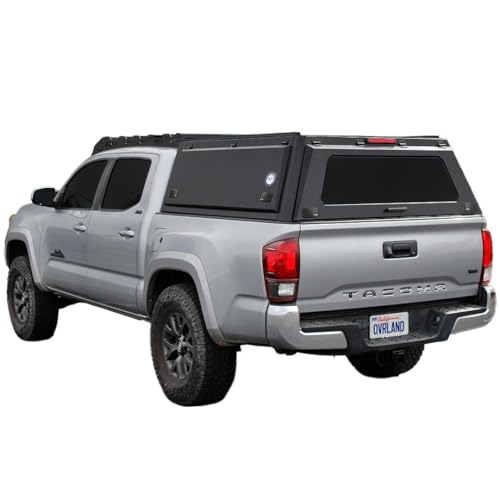
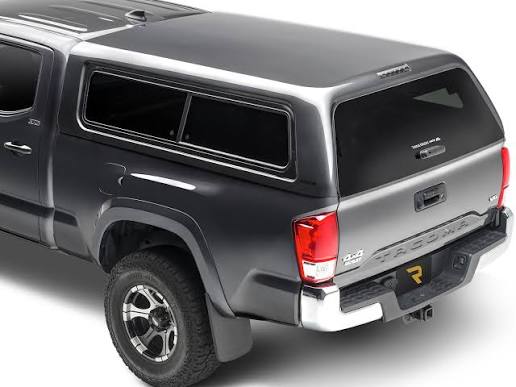
Caps engineered for work and adventure



Rated 4.8 by verified buyers


Common questions about modular cap systems
You can mix and match any combination of solid, sliding glass, and screen panels across the four side openings (two per side). Many users run solid panels on the lower half for security and screen panels on top for ventilation, or they swap entire sides depending on the season. Each panel locks independently, so you're not limited to symmetrical setups.
The rear door is ordered separately as either lift glass, split swing, or solid with slider—you pick one rear configuration at purchase. Side panels are interchangeable after installation.
None. The cam latches operate by hand—flip the lever to release, slide the panel out of the rail, then slide the new panel in and flip the latch back to lock. The entire swap takes about two minutes per panel once you've done it once.
The only tools required are for the initial cap installation (clamps onto the bed rail), which uses a socket wrench and the provided templates. After that, all panel changes are tool-free.
Yes, as long as the tent's static weight falls within the 400-pound roof capacity and your crossbar spread matches one of the factory mounting positions (48" or 58" on-center). The roof is designed to handle overnight loads when the truck is parked and level.
Dynamic load—while driving—is limited to 165 pounds, so you'll need to fold and secure a soft-shell tent before traveling, or choose a hard-shell model that stays mounted. Always distribute weight evenly across both crossbars.
Every sliding glass panel includes a keyed lock at the leading edge. When the panel is closed, turn the key to engage a bolt that passes through the frame and into the cap body. You can crack the window an inch or two and still lock it in that position using a secondary pin lock built into the track.
Solid panels use the same cam-latch system as the main cap doors, which locks automatically when you close the latch—no separate key required unless you want to add an optional keyed cam.
The EPDM gaskets remain flexible down to -40°F, so sealing performance doesn't degrade in cold climates. The composite panels have an insulating foam core that reduces heat transfer, keeping the bed interior slightly warmer than an all-metal cap would.
Snow load on the roof is part of the static capacity rating—400 pounds total, which includes any gear, racks, and accumulated snow. If you park outside during heavy snowfall, brush the roof periodically to stay within the load limit. The drainage channels continue to function in freezing conditions, though ice can temporarily block weep holes if water refreezes overnight.
The cap body and panels arrive with a textured powder coat in black, white, or silver. If you want a custom color, the powder coat surface accepts automotive paint after light sanding and primer. Many users have the cap painted at a body shop to match their truck's factory color.
Vinyl wrapping is also common—the flat surfaces on the roof and side panels make alignment straightforward. The powder coat provides a clean base for adhesive, and you can wrap individual panels separately before installing them, which simplifies the process compared to wrapping an assembled cap.
No. Every panel is a standalone component that slides out of the rail system. If you crack a glass panel or dent a solid panel, order a replacement for just that piece and swap it in. The rail interface is universal across all panel types, so a replacement will fit regardless of when you originally purchased the cap.
We stock replacement panels individually, and most ship within a week. If you're in a remote area or need a panel immediately, some users keep a spare solid panel on hand as a temporary stand-in until the correct replacement arrives.